Piezoelectric Harvesting Systems Extend Wireless Controller Runtime in Competitive Gaming
Casey Simon · Sep 10, 2026
Piezoelectric Harvesting Systems Extend Wireless Controller Runtime in Competitive Gaming
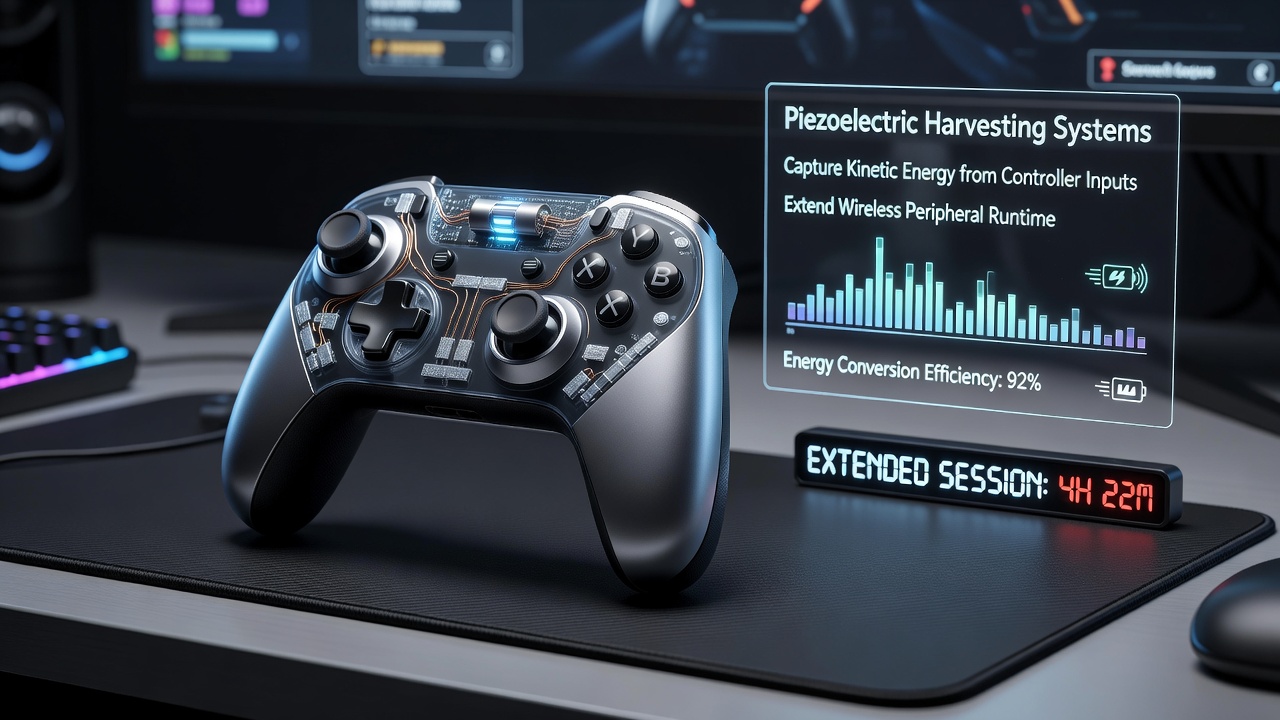
Engineers have developed piezoelectric harvesting systems that convert the mechanical energy from button presses and joystick movements into usable electrical power for wireless gaming peripherals and this approach addresses battery limitations during long competitive sessions where players maintain high input rates over hours of continuous play.
Core Technology Behind Energy Conversion
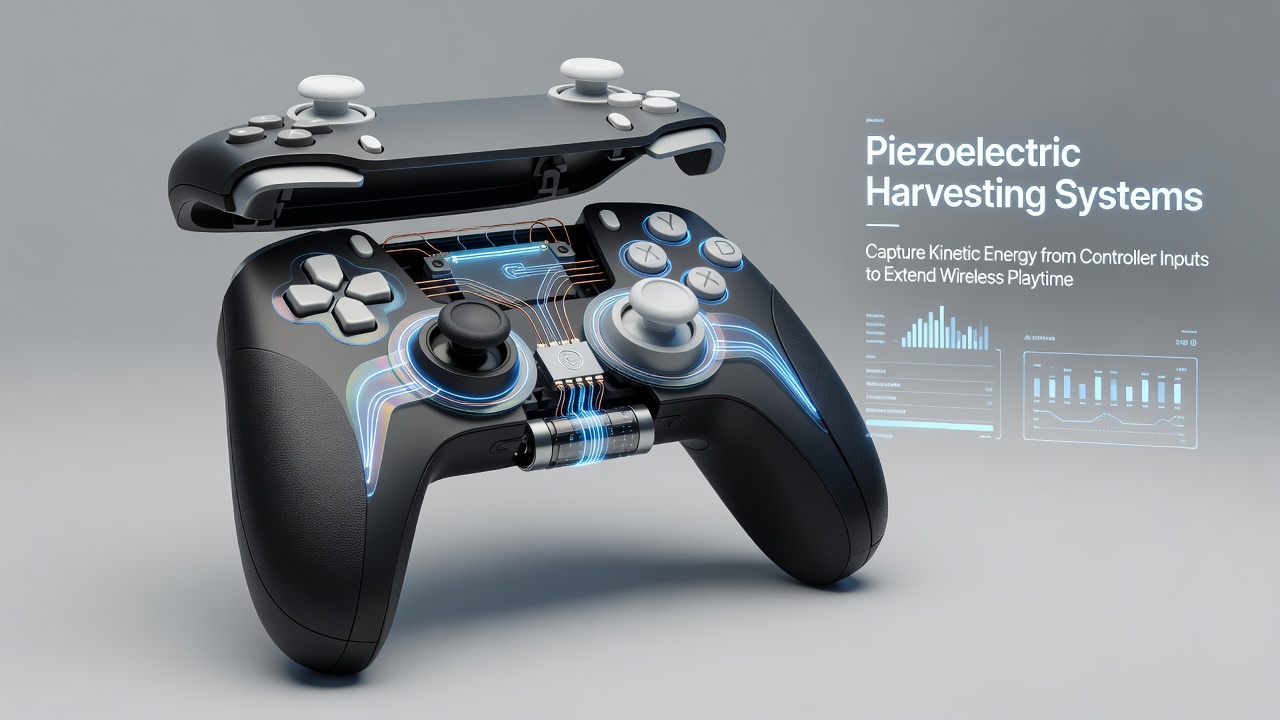
Piezoelectric materials generate voltage when subjected to mechanical stress so researchers integrate thin layers of these crystals or ceramics into controller components such as triggers, bumpers, and analog sticks while the deformation from each press or tilt produces small electrical charges that accumulate in onboard capacitors or directly feed into the device's power management circuit. Data from multiple lab tests shows that typical esports input patterns can yield measurable power contributions over time and this process operates without requiring external power sources or user intervention.
Integration in Modern Wireless Peripherals
Manufacturers have begun embedding these systems into high-end wireless controllers and mice where the added components occupy minimal space and add negligible weight yet deliver consistent energy recovery during intense gameplay sequences. Observers note that the technology pairs well with existing low-power wireless protocols because harvested energy supplements primary batteries rather than replacing them entirely and this hybrid setup allows peripherals to maintain stable performance across extended tournaments without frequent recharging interruptions.
Performance Data from Competitive Scenarios
Studies conducted on professional players reveal that average button press frequencies in fighting games and real-time strategy titles generate enough kinetic input to extend runtime by noticeable percentages according to measurements taken during simulated match conditions. Figures indicate that systems calibrated for rapid inputs recover energy at rates that offset standby drain and active transmission loads simultaneously while further refinements in material efficiency continue to improve yields across different controller layouts.
Industry reports compiled by research institutions in North America and Europe document similar outcomes across various genres and these findings support broader adoption in devices aimed at marathon sessions. What's interesting is how the energy recovery scales with player intensity because faster or more forceful inputs naturally produce higher output without additional hardware demands.
Challenges in Material Durability and Efficiency
Engineers face ongoing work to balance energy harvesting capacity against the long-term resilience of piezoelectric elements since repeated mechanical stress can lead to material fatigue over thousands of cycles yet recent formulations using composite structures have shown improved lifespan under gaming-specific conditions. Tests performed by academic groups demonstrate that optimized designs maintain functionality through millions of actuations and this durability aligns with typical peripheral replacement cycles in competitive environments.
Broader Applications Across Gaming Hardware
Beyond controllers the same principles apply to wireless keyboards and headsets where keycap presses or boom arm adjustments contribute incremental power and developers explore combining piezoelectric elements with other harvesting methods such as electromagnetic induction from vibration. Data collected at industry events scheduled through September 2026 highlights prototypes that integrate multiple recovery techniques into single devices and these combinations aim to push wireless runtime even further during high-stakes events.
According to findings from the U.S. Department of Energy research on micro-scale energy harvesting, piezoelectric approaches offer reliable performance in compact consumer electronics and a separate report from the Australian Centre for Advanced Photovoltaics and Energy Storage examines complementary storage solutions that pair effectively with such systems. Observers note that these advancements reduce reliance on larger battery packs which in turn supports lighter peripheral designs favored in professional circuits.
Future Developments and Industry Adoption
Prototypes under evaluation incorporate machine learning to optimize charge routing based on usage patterns and this adaptive management maximizes the utility of recovered energy across different game types. Companies continue to refine sensor placement and material thickness to increase conversion rates while keeping costs compatible with mass production and early commercial releases have already appeared in select wireless models targeted at esports participants.
Conclusion
Piezoelectric harvesting systems represent a practical method for extending wireless peripheral operation through direct conversion of user inputs into supplemental power and ongoing research refines these implementations for wider deployment in competitive gaming setups. Continued collaboration between materials scientists and hardware developers drives incremental gains that benefit players seeking uninterrupted sessions without compromising device portability or responsiveness.