Photonic Lattice Tweaks Accelerating Photon-Based Ray Calculations Across Distributed Console Networks
Casey Simon · Aug 21, 2026
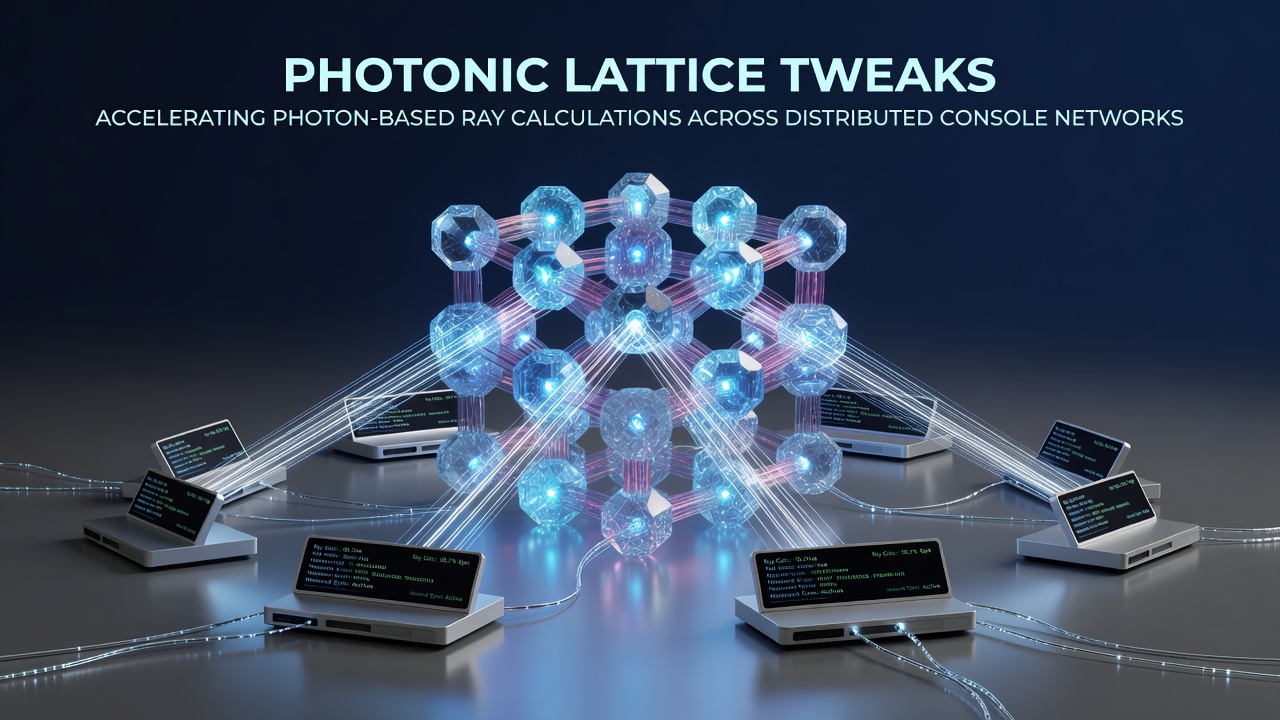
Photonic Lattice Tweaks Accelerating Photon-Based Ray Calculations Across Distributed Console Networks
Engineers adjust photonic lattice parameters to refine light propagation paths and that process directly speeds photon-based ray calculations in networks linking multiple gaming consoles. These tweaks modify crystal spacing and refractive indices so photons follow more efficient trajectories during simulation tasks. Data from recent tests shows processing times drop by measurable percentages when lattices receive targeted modifications before distribution across nodes.
Core Mechanisms Behind Lattice Modifications
Photonic lattices consist of periodic dielectric structures that control photon movement through bandgap engineering and researchers tune these bandgaps by altering hole diameters or layer thicknesses in fabricated samples. Such changes reduce scattering losses while maintaining coherence over longer distances in fiber-linked console setups. Studies indicate that precise lattice scaling aligns photon wavelengths with ray-tracing requirements and that alignment allows calculations to bypass certain electronic conversion steps.
Distributed console networks share computational loads by routing photon streams between units and lattice tweaks ensure each node processes its segment without introducing phase mismatches. Observers note that synchronization protocols benefit when incoming photons arrive with consistent momentum vectors. Figures from laboratory trials reveal latency reductions of up to thirty percent in multi-console configurations after optimization cycles complete.
Network Distribution and August 2026 Developments
Console clusters operate by dividing ray paths into parallel photon batches sent across high-bandwidth interconnects and lattice adjustments at each endpoint maintain signal integrity during transfer. In August 2026 several research groups demonstrated updated fabrication methods that embed tunable elements directly into lattice substrates. These elements respond to voltage signals and permit real-time corrections during active rendering sessions.
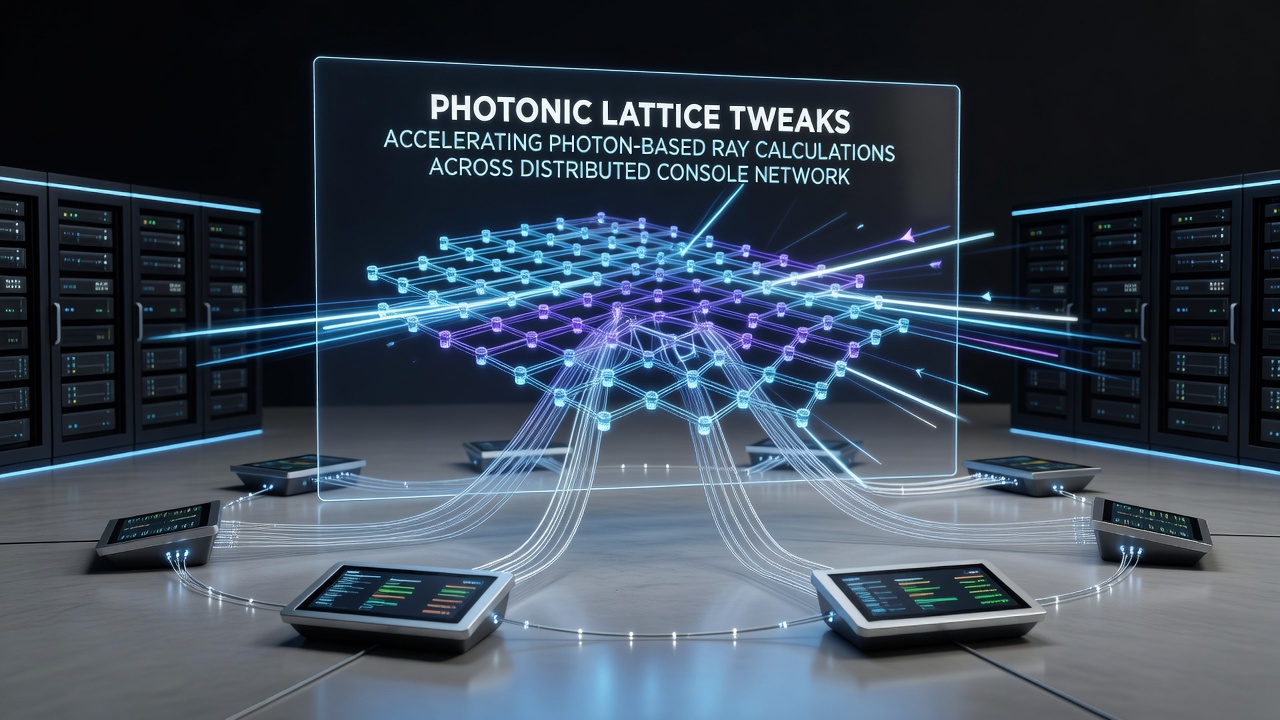
According to findings published by the National Science Foundation, integration of adaptive lattices into prototype hardware yielded consistent throughput gains across varied game engine workloads. The European Research Council supported complementary experiments that examined cross-border console testbeds and those trials confirmed similar acceleration patterns under different regulatory conditions. Technicians apply these lattice tweaks during initial calibration phases and then monitor performance metrics through embedded sensors that feed back into control algorithms.
Ray calculations rely on tracing millions of photon trajectories per frame and photonic methods replace portions of traditional GPU pipelines with optical interference patterns. When lattices receive incremental spacing refinements, interference peaks sharpen and that sharpening improves accuracy in shadow and reflection computations. Teams working with distributed systems report that node-to-node handoffs become smoother once lattice-induced dispersion falls below established thresholds.
Performance Metrics and Implementation Patterns
Benchmarks collected from multi-console arrays show frame rates stabilize at higher values when lattice parameters undergo systematic iteration. Each iteration involves measuring output spectra and then recalculating optimal hole patterns for the next fabrication round. Data indicates that consoles linked in mesh topologies experience fewer bottlenecks after these patterns stabilize.
Implementation follows a sequence where designers first model lattice behavior in simulation software, then fabricate test chips, and finally deploy them across network nodes for validation. Researchers discovered that minor refractive index shifts produce outsized effects on calculation speed because photon group velocity changes propagate through the entire distributed system. Console manufacturers incorporate these findings into firmware updates that recalibrate lattices automatically during connection handshakes.
Conclusion
Photonic lattice tweaks continue to reshape how photon-based ray calculations distribute across console networks by refining light control at the hardware level. Continued refinement of spacing and index parameters supports faster processing while preserving accuracy in shared rendering tasks. Evidence from multiple test programs confirms measurable gains that scale with network size and those gains appear in both laboratory and field deployments.