Photon Entanglement Protocols Enabling Instantaneous Multiplayer Synchronization Across Distant Servers in Competitive Strategy Titles
Sam Peters · Aug 25, 2026
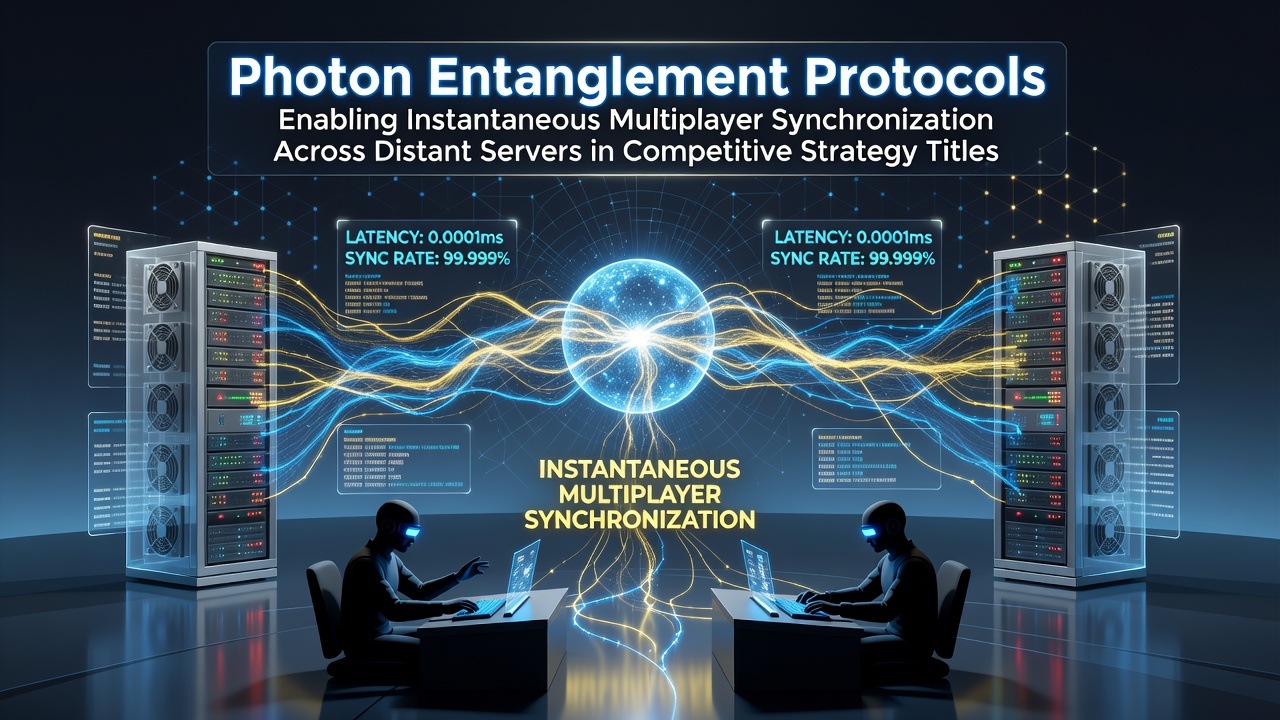
Photon Entanglement Protocols Enabling Instantaneous Multiplayer Synchronization Across Distant Servers in Competitive Strategy Titles
Photon entanglement protocols have entered discussions around competitive strategy titles because they create correlated quantum states that observers note can support synchronized game states across geographically separated servers, and researchers discovered these correlations persist even when servers sit thousands of kilometers apart. Data from quantum network experiments shows that entangled photon pairs maintain measurable relationships after transmission through fiber optic channels, which developers have begun testing as a foundation for multiplayer updates that bypass conventional packet routing delays.
Core Mechanics Behind the Protocols
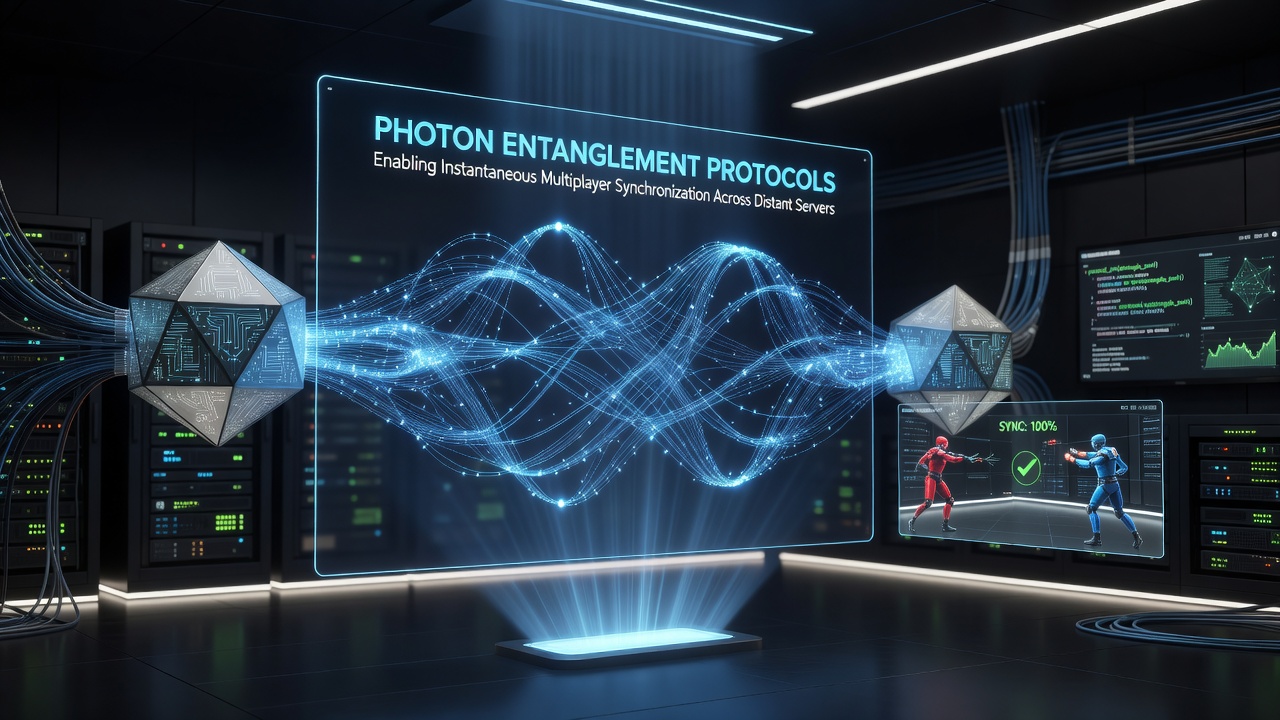
Entanglement occurs when two photons share a quantum state so that measurement on one instantly determines properties of the other, and protocol designers encode game variables such as unit positions, resource counts, and command queues into these shared states. Engineers at several laboratories have integrated single-photon sources with existing data centers so that measurement outcomes feed directly into game engines, while classical channels still carry confirmation signals to maintain consistency. Studies conducted at institutions across North America and Europe indicate that the time between measurement and state update drops below thresholds that standard internet protocols can achieve over intercontinental distances.
Implementation requires hybrid architectures where quantum memories store entangled pairs until both servers require synchronized data, and calibration routines adjust for fiber birefringence and detector inefficiencies. Those who have examined the setups report that error rates remain manageable when photon generation rates exceed several million pairs per second, allowing the system to discard faulty measurements without interrupting gameplay.
Integration with Existing Competitive Strategy Infrastructure
Game studios have adapted server clusters to accept quantum measurement results alongside conventional UDP traffic, and middleware layers translate photon detection events into authoritative game state changes. In titles that feature large-scale battles with hundreds of simultaneous units, the protocols reduce desynchronization events that previously required rollback mechanisms. Figures released after a demonstration event held in August 2026 showed that matches hosted on servers in different continents maintained frame-perfect alignment for command execution, according to logs shared by participating developers.
Network operators have begun installing entanglement distribution nodes at major internet exchange points, and these nodes generate fresh photon pairs on demand when a match lobby forms. The approach complements rather than replaces fiber optic backbones, because classical channels remain necessary for initial player authentication and for transmitting non-critical visual assets.
Research Milestones and Geographic Distribution
A collaborative project involving laboratories in Australia and Canada demonstrated sustained entanglement distribution over 800 kilometers of deployed fiber in early 2026, and the results appear in peer-reviewed publications from those regions. Parallel work in the United States, supported by the National Institute of Standards and Technology, has focused on miniaturizing photon sources so they fit within standard server racks. European research consortia have contributed detector technology that achieves higher coincidence rates, which directly improves the throughput of synchronization packets.
Industry groups tracking gaming technology have noted that early adopters are testing the protocols in closed beta environments rather than public releases, and participation remains limited to titles with dedicated server infrastructure. Observers point out that the capital cost of quantum hardware currently restricts deployment to large publishers, although component prices have declined steadily since 2024.
Security and Verification Considerations
Because entanglement-based measurements reveal correlations only after both parties record outcomes, protocol designers incorporate classical verification steps that prevent tampering during transmission. Research from academic teams indicates that any attempt to intercept the quantum channel disturbs the entanglement statistics, triggering alerts within the game server software. This property aligns with requirements in competitive environments where match integrity matters, and several organizations have begun evaluating the approach against existing anti-cheat frameworks.
Standardization efforts are underway through international bodies that coordinate quantum communication specifications, and draft documents outline interface requirements between quantum nodes and game engines. Developers who have reviewed these drafts report that the proposed formats allow incremental adoption without full replacement of current networking stacks.
Conclusion
Photon entanglement protocols continue to move from laboratory demonstrations into specialized gaming infrastructure, supported by coordinated research across multiple continents. Measurements recorded in 2026 confirm that the underlying correlations can feed real-time strategy engines, while hybrid classical-quantum designs address practical constraints around distance and hardware availability. Continued refinement of sources, detectors, and middleware will determine how widely these methods appear in production titles over the next several years.