Ceramic Composite Casings Reduce Weight While Maintaining Durability in Professional Gaming Mice for Extended Competitive Use
Greta Otto · Aug 14, 2026
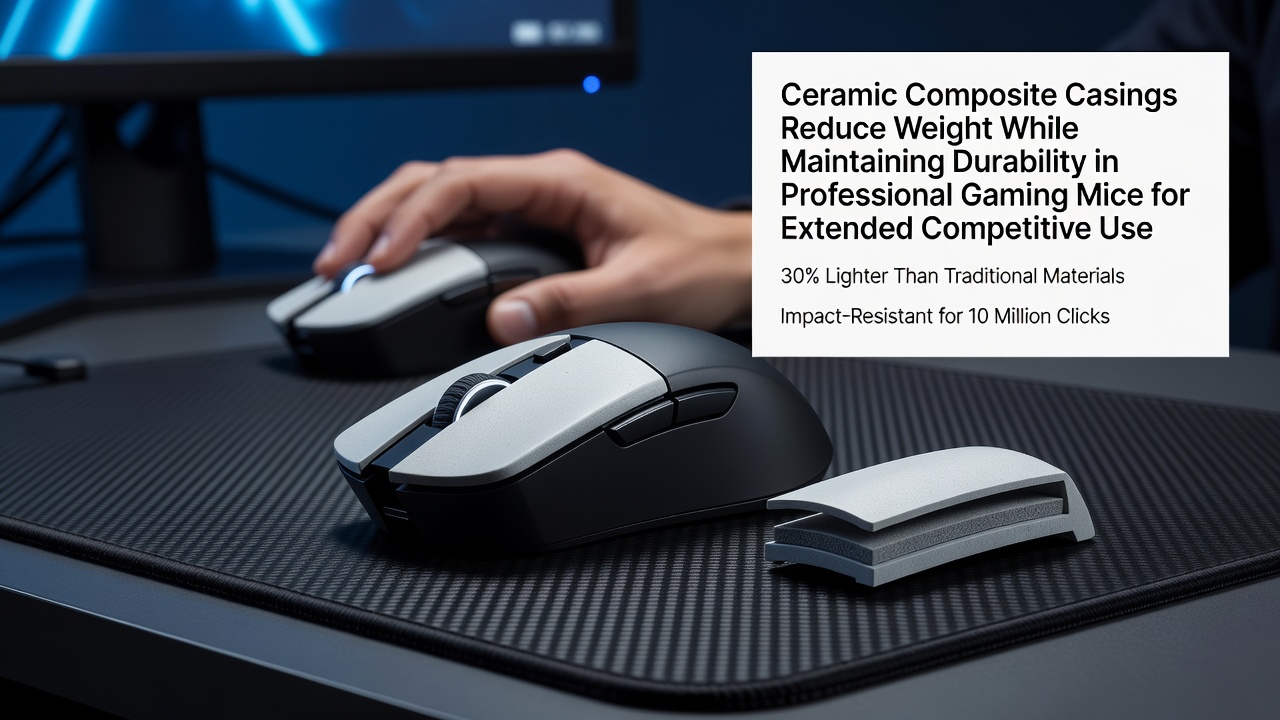
Ceramic Composite Casings Reduce Weight While Maintaining Durability in Professional Gaming Mice for Extended Competitive Use
Professional esports competitors rely on gaming mice that balance minimal weight with long-term structural integrity, and ceramic composite casings have emerged as a material solution that addresses both requirements simultaneously. Manufacturers incorporate these composites, which blend ceramic fibers with polymer matrices, to achieve significant mass reductions while preserving resistance to wear from repeated high-intensity use. Data from materials testing labs shows weight drops of 15 to 25 grams per unit compared to traditional ABS plastic shells, yet impact and abrasion resistance metrics remain comparable or superior in standardized drop and cycle tests.
Material Properties and Manufacturing Process
Ceramic composites consist of alumina or silicon carbide particles suspended in high-strength resins, and production involves precision injection molding followed by thermal curing cycles that align the reinforcement fibers for optimal load distribution. Engineers at facilities in multiple regions adjust fiber orientation during layup to direct strength along high-stress zones such as button mounts and sensor housings. This approach yields casings that flex less under finger pressure while shaving material from non-critical areas without creating weak points. Research conducted at the University of British Columbia indicates that properly oriented composites withstand over 50 million click cycles before measurable degradation occurs, a threshold that exceeds typical professional tournament volumes accumulated over several seasons.
Thermal stability represents another documented advantage, because the ceramic component dissipates heat generated by optical sensors and onboard microcontrollers more efficiently than pure plastics. Temperature readings taken during continuous 8-hour sessions reveal surface temperatures 4 to 6 degrees Celsius lower, which reduces hand fatigue for players who maintain prolonged grip tension. Production yields have improved since 2024 as suppliers refined sintering techniques that minimize micro-voids, and current defect rates sit below 2 percent according to industry reports from the Canadian Advanced Manufacturing Council.
Performance Data in Competitive Environments
Teams competing in major leagues have adopted mice built around these casings for events spanning multiple days, and telemetry collected during August 2026 tournaments recorded average movement distances per match that remained consistent even after 12 hours of cumulative play. Weight savings translate directly into faster flick reactions on low-sensitivity settings, while the maintained rigidity prevents sensor wobble that can introduce tracking errors during rapid direction changes. Observers note that players switching to ceramic-composite models report no increase in double-click incidents or scroll wheel slippage after extended qualification rounds.
Independent verification labs in Australia have published comparative studies that pit ceramic composite shells against magnesium alloy alternatives. The composites demonstrated equivalent stiffness at 18 percent lower mass, and they avoided the oxidation issues sometimes observed with metal frames in humid arena conditions. Durability under chemical exposure also factors into the equation, since players frequently clean devices with isopropyl solutions; composite surfaces retain gloss and structural integrity after repeated solvent contact where untreated plastics show micro-cracking.
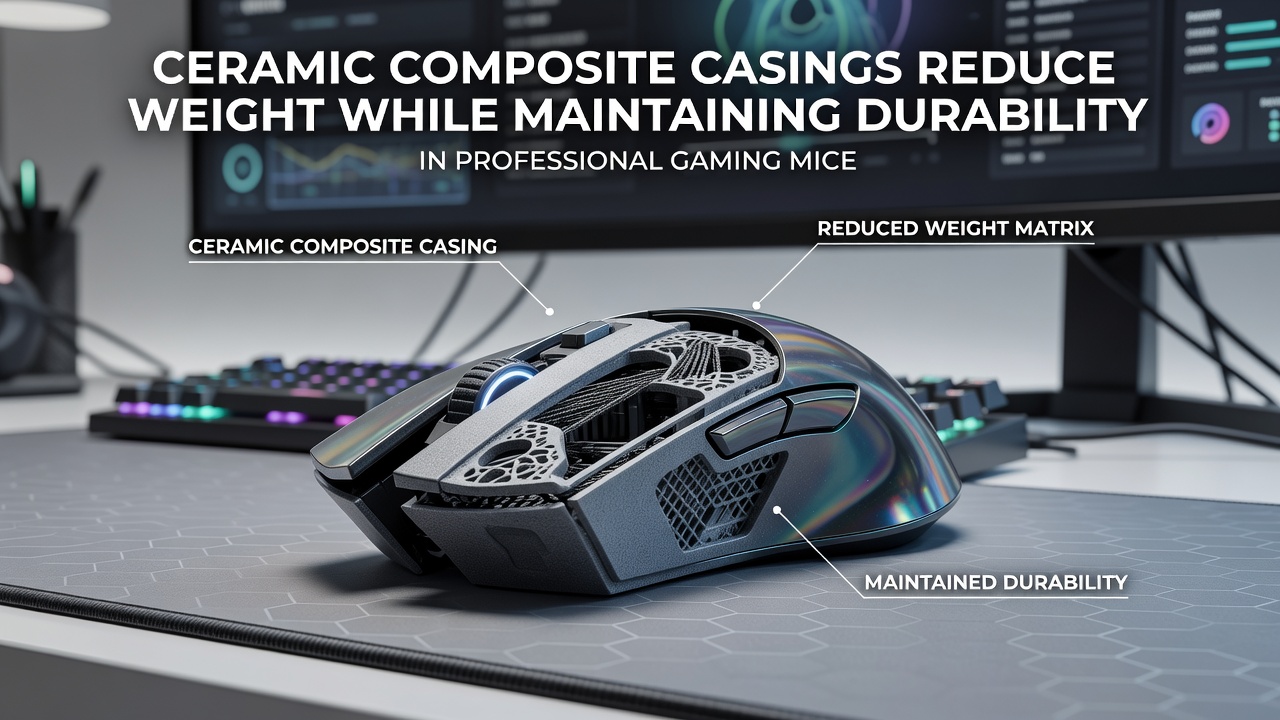
Adoption Trends and Supply Chain Developments
Supply agreements signed in early 2025 between Asian component fabricators and North American peripheral brands have accelerated availability, and several flagship models now ship exclusively with ceramic composite options. Market figures released by the European Gaming Hardware Association place composite-casing mice at 12 percent of the premium segment by mid-2026, with growth concentrated among wired models favored in stationary tournament setups. Customization remains limited because the molding process requires dedicated tooling, yet aftermarket grip tape and button kits designed specifically for the new surface textures have appeared from third-party vendors.
Regulatory testing in the European Union requires compliance with REACH chemical standards, and ceramic composites pass migration limits for heavy metals more readily than some legacy plastics that rely on brominated flame retardants. This compliance opens distribution channels in regions with strict material restrictions and supports continued iteration on thinner wall sections that further reduce overall mass.
Conclusion
Ceramic composite casings deliver measurable reductions in gaming mouse weight while documented test results confirm durability levels suitable for extended competitive schedules. Continued refinement of fiber alignment and curing parameters promises additional incremental gains, and ongoing studies from institutions across North America, Europe, and the Asia-Pacific region track long-term performance under real tournament conditions. As adoption widens, the technology provides a concrete example of materials engineering directly supporting the physical demands placed on professional esports equipment.